


| ???jsp.display-item.social.title??? |


|
???item.export.label???


Please use this identifier to cite or link to this item:
https://tede.ufam.edu.br/handle/tede/11386| ???metadata.dc.type???: | Dissertação |
| Title: | Os jogos eletrônicos nas aulas de educação física: ressignificando a prática |
| Other Titles: | Video games in physical education classes: reinterpreting the practice |
| ???metadata.dc.creator???: | Silva, Carla Raphaela Figueira da  |
| ???metadata.dc.contributor.advisor1???: | Corrêa, Lionela da Silva |
| ???metadata.dc.contributor.referee1???: | Amorim, Ida de Fátima de Castro |
| ???metadata.dc.contributor.referee2???: | Dias, Maria Aparecida |
| ???metadata.dc.description.resumo???: | O estudo aborda a integração dos Jogos Eletrônicos (JEs) no currículo escolar em um contexto no qual os estudantes estão profundamente imersos no meio digital. Embora a Base Nacional Comum Curricular de 2017 incentive a reflexão crítica sobre mídias digitais, ela não oferece um guia objetivo e substancial para trabalhar os JEs na Educação Física. A pesquisa foi motivada pela dificuldade enfrentada pela pesquisadora e outros docentes de escolas públicas em Alenquer, interior do estado do Pará, que carecem de infraestrutura, equipamentos e acesso à internet para ministrar o conteúdo de forma prática. O objetivo geral foi analisar a aplicabilidade do conteúdo Jogos Eletrônicos nas aulas de Educação Física para turmas de 6º e 7º ano do ensino fundamental em uma escola pública de Alenquer, Pará. Como contribuição, foi elaborado um e-book pedagógico que sistematiza as atividades desenvolvidas para os professores de 6º e 7º ano, cujo conteúdo agrega a reprodução de práticas corporais a partir dos JEs. A pesquisa de campo adotou uma abordagem qualitativa. A coleta de dados incluiu: Entrevistas com seis professores de Educação Física para verificar as metodologias e dificuldades de ensino; questionário com 80 alunos de 6º e 7º anos para identificar os JEs mais vivenciados, sendo o Free Fire o mais citado; intervenção pedagógica que foram aplicados planos de aula com práticas corporais baseadas em JEs populares (Free Fire, Pac-Man, Among Us e Subway Surfers), adaptando suas lógicas virtuais para o movimento físico; grupos focais que foram realizados com os alunos para investigar suas percepções sobre a vivência das práticas corporais recriadas. A intervenção demonstrou que a recreação dos JEs em atividades físicas promoveu o engajamento e a cooperação, além de permitir o desenvolvimento de habilidades motoras. Os alunos confrontaram a dicotomia entre o virtual e o real, percebendo a diferença entre as habilidades e poderes do jogo digital (que permitem reviver e não sentir cansaço) e o esforço físico real exigido na quadra. A prática também estimulou a reflexão crítica sobre os benefícios (estratégia, raciocínio) e os riscos do uso excessivo de games (vício, sedentarismo, síndrome do olho seco). O envolvimento dos alunos como co-construtores, sugerindo alterações nas regras, fortaleceu o protagonismo juvenil. A pesquisa conclui que os jogos eletrônicos, quando mediados com criatividade e consciência crítica, são uma oportunidade de inovação e inclusão. Como contribuição, foi elaborado um e-book pedagógico que sistematiza as atividades desenvolvidas para professores de 6º e 7º ano. |
| Abstract: | This study addresses the integration of Electronic Games (EGs) into the school curriculum in a context where students are deeply immersed in the digital environment. Although the 2017 National Common Curriculum Base encourages critical reflection on digital media, it does not offer an objective and substantial guide for working with EGs in Physical Education. The research was motivated by the difficulties faced by the researcher and other teachers in public schools in Alenquer, in the interior of the state of Pará, who lack the infrastructure, equipment, and internet access to teach the content in a practical way. The overall objective was to analyze the applicability of the content of Electronic Games in Physical Education classes for 6th and 7th grade students in a public school in Alenquer, Pará. As a contribution, a pedagogical e-book was developed that systematizes the activities developed for 6th and 7th grade teachers, whose content includes the reproduction of body practices based on EGs. The field research adopted a qualitative approach. Data collection included: Interviews with six Physical Education teachers to verify teaching methodologies and difficulties; a questionnaire with 80 students in the 6th and 7th grades to identify the most frequently experienced video games, with Free Fire being the most cited; a pedagogical intervention that implemented lesson plans with physical activities based on popular video games (Free Fire, Pac-Man, Among Us, and Subway Surfers), adapting their virtual logic to physical movement; and focus groups conducted with students to investigate their perceptions of experiencing the recreated physical activities. The intervention demonstrated that recreating video games in physical activities promoted engagement and cooperation, in addition to allowing the development of motor skills. Students confronted the dichotomy between the virtual and the real, perceiving the difference between the skills and powers of the digital game (which allow them to relive the experience without feeling tired) and the real physical effort required on the court. The practice also stimulated critical reflection on the benefits (strategy, reasoning) and risks of excessive video game use (addiction, sedentary lifestyle, dry eye syndrome). The involvement of students as co-creators, suggesting changes to the rules, strengthened youth empowerment. The research concludes that video games, when mediated with creativity and critical awareness, are an opportunity for innovation and inclusion. As a contribution, an educational e-book was created that systematizes the activities developed for 6th and 7th grade teachers. |
| Keywords: | Inovações educacionais Jogos eletrônicos Tecnologia educacional Ensino - Meios auxiliares Educação física (Ensino fundamental) - Estudo e ensino |
| ???metadata.dc.subject.cnpq???: | CIENCIAS DA SAUDE |
| ???metadata.dc.subject.user???: | Jogos eletrônicos Prática corporal Educação física Escola |
| Language: | por |
| ???metadata.dc.publisher.country???: | Brasil |
| Publisher: | Universidade Federal do Amazonas |
| ???metadata.dc.publisher.initials???: | UFAM |
| ???metadata.dc.publisher.department???: | Faculdade de Educação Física e Fisioterapia |
| ???metadata.dc.publisher.program???: | Programa de Pós-graduação em Educação Física |
| Citation: | SILVA, Carla Raphaela Figueira da. Os jogos eletrônicos nas aulas de educação física: ressignificando a prática. 2025. 127 f. Dissertação (Mestrado Profissional em Educação Física em Rede Nacional) – Universidade Federal do Amazonas, Manaus (AM), 2025. |
| ???metadata.dc.rights???: | Acesso Aberto |
| ???metadata.dc.rights.uri???: | https://creativecommons.org/licenses/by-nc-nd/4.0/ |
| URI: | https://tede.ufam.edu.br/handle/tede/11386 |
| Issue Date: | 30-Sep-2025 |
| Appears in Collections: | Mestrado Profissional em Educação Física |
Files in This Item:
| File | Description | Size | Format | |
|---|---|---|---|---|
| DISS_CarlaSilva_PROEF.pdf | 7 MB | Adobe PDF |  Download/Open Preview | |
| PROD.EDUC_CarlaSilva_PROEF.pdf | 6.94 MB | Adobe PDF | 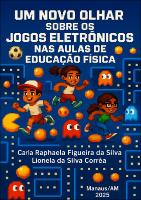 Download/Open Preview |
Items in DSpace are protected by copyright, with all rights reserved, unless otherwise indicated.